Rabbit’s Blood, The Soul of Turkish Tea
Discover the art of "Tavşan Kanı" tea, the iconic ince belli glass, and the timeless rituals of Turkish hospitality across Anatolia with Local Explore Tours.
Beyond the Metaphor: The Visual Anatomy of Perfection
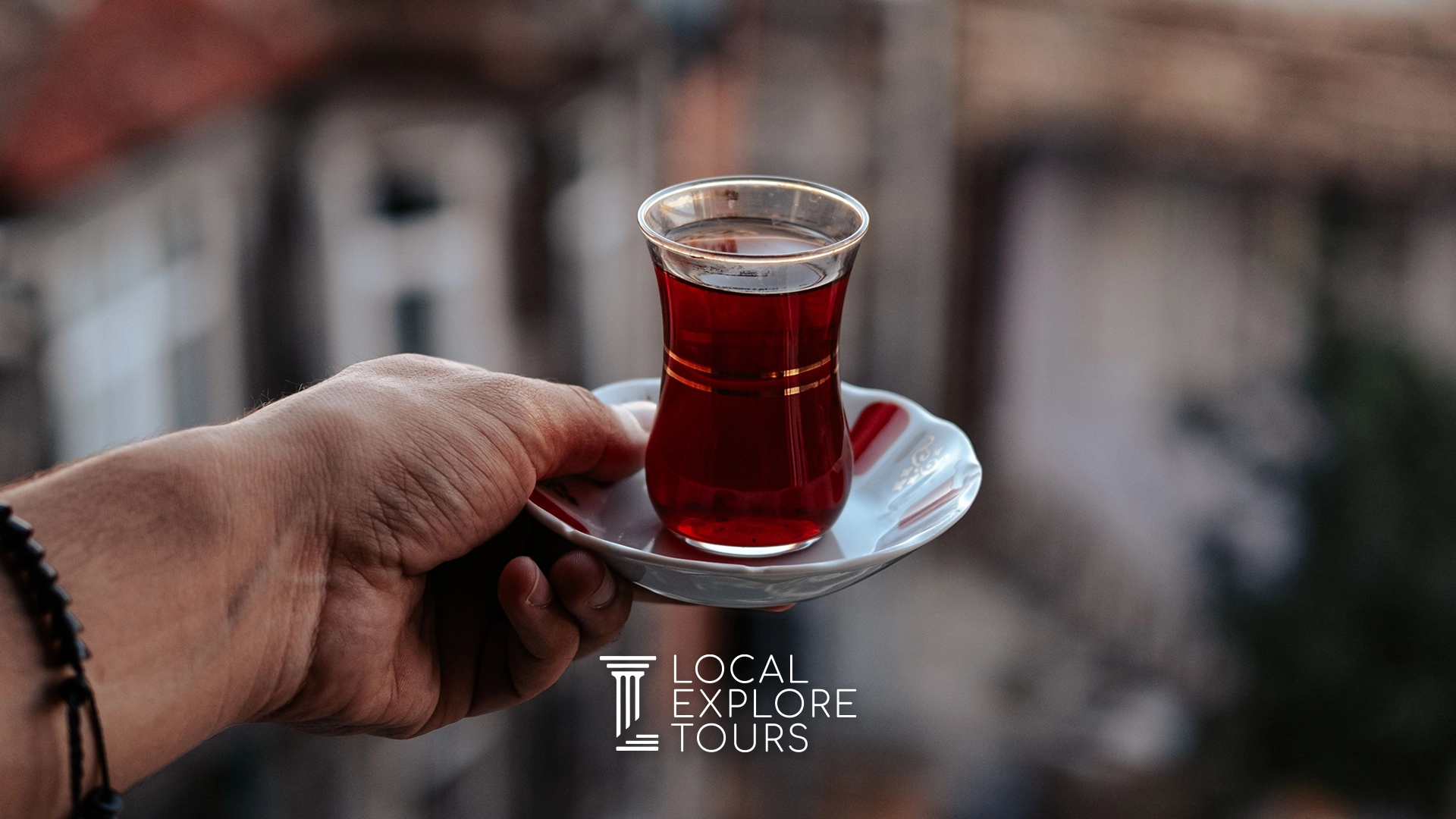
When tea leaves steep properly, they release a spectrum of tones ranging from pale amber to muddy dark brown. But "tavşan kanı" demands optical perfection:
Clarity: Held against the midday Aegean light or the afternoon sun over the Bosphorus, the tea must remain completely translucent. There should be no residue or suspended leaf dust.
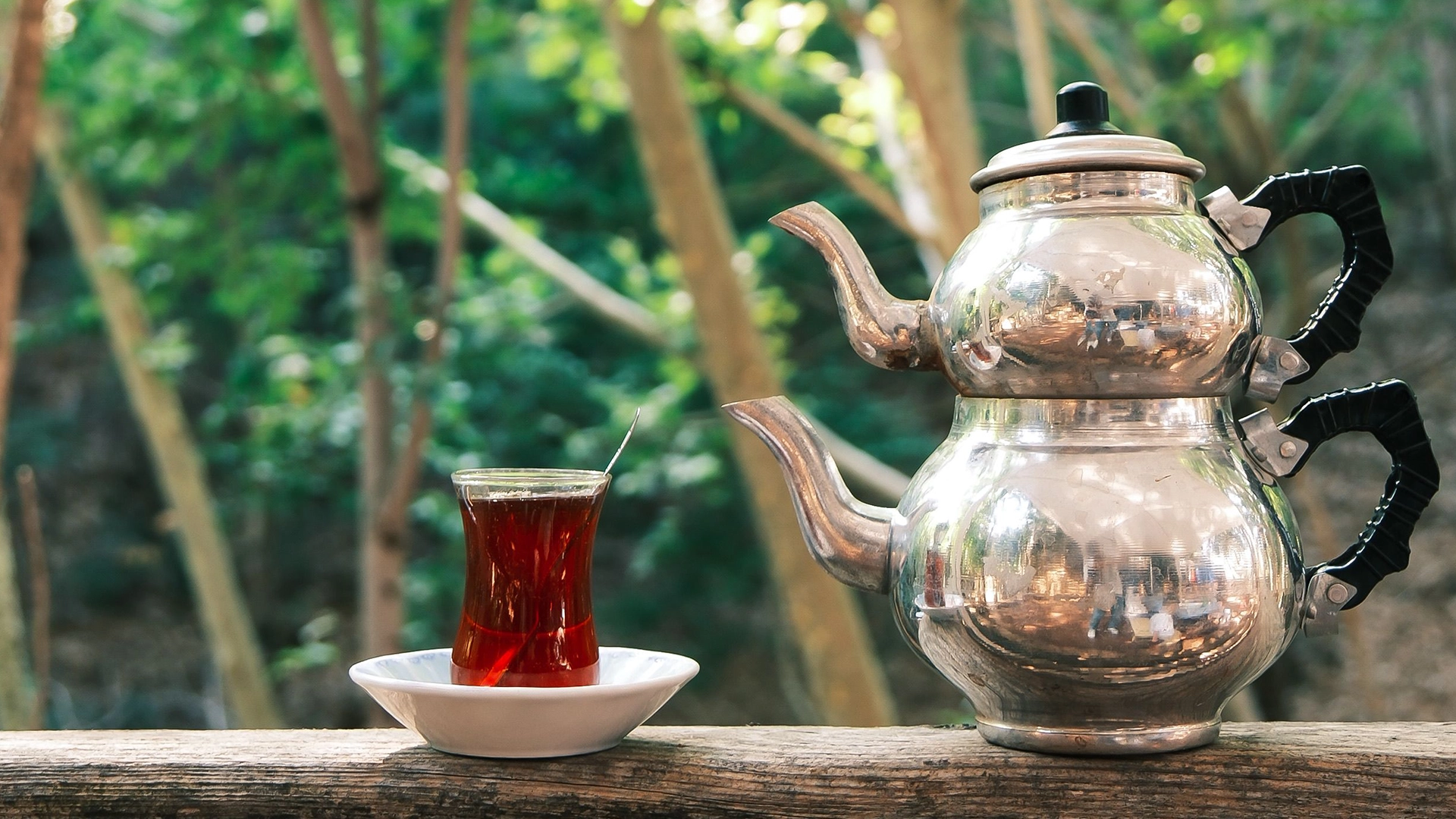
The Crimson Core: It possesses a glowing, jewel-like red glow—warm, vibrant, and deep.
The Proper Ratio: A skilled server pours concentrated tea essence (dem) from the upper kettle and tempers it with boiling water from the bottom chamber to achieve the exact requested balance—most often orta (medium strength).
This attention to visual detail is why Turkish tea is never served in ceramic mugs. It belongs exclusively inside the iconic ince belli (slim-waisted) tulip-shaped glass. The clear glass showcases the glowing crimson color, while the narrow waist allows you to hold the hot rim with your fingertips without burning your hand.
The Anatomy of the Ritual: Çaydanlık and Slow Steam
Preparing genuine "tavşan kanı" tea is an exercise in mindful slowness, contrasting sharply with the rushed convenience of tea bags. The entire process relies on the çaydanlık, a two-tiered stacked kettle designed for dual thermal management:
The Lower Pot: Holds fresh spring water brought to a vigorous rolling boil.
The Upper Teapot: Holds whole loose tea leaves harvested from the terraced green hillsides of Rize along the mist-laden Black Sea coast.
The Resting Steam: As water boils below, its steam gently warms and awakens the dry leaves above without scorching them. Once water is poured over the leaves, the upper pot is left to infuse (demlenmek) over gentle steam for 15 to 20 minutes until the tea leaves naturally sink to the bottom.
In traditional rural tea houses or family courtyards, this process is taken even further with ornate, hand-engraved metal samovars and silver teapots, where charcoal embers infuse the water with gentle, consistent warmth.
The Delivery of Life: The "Askı" and the Neighborhood Rhythm
If tea is the lifeblood of Turkey, the çaycı (tea server) is its circulatory system.
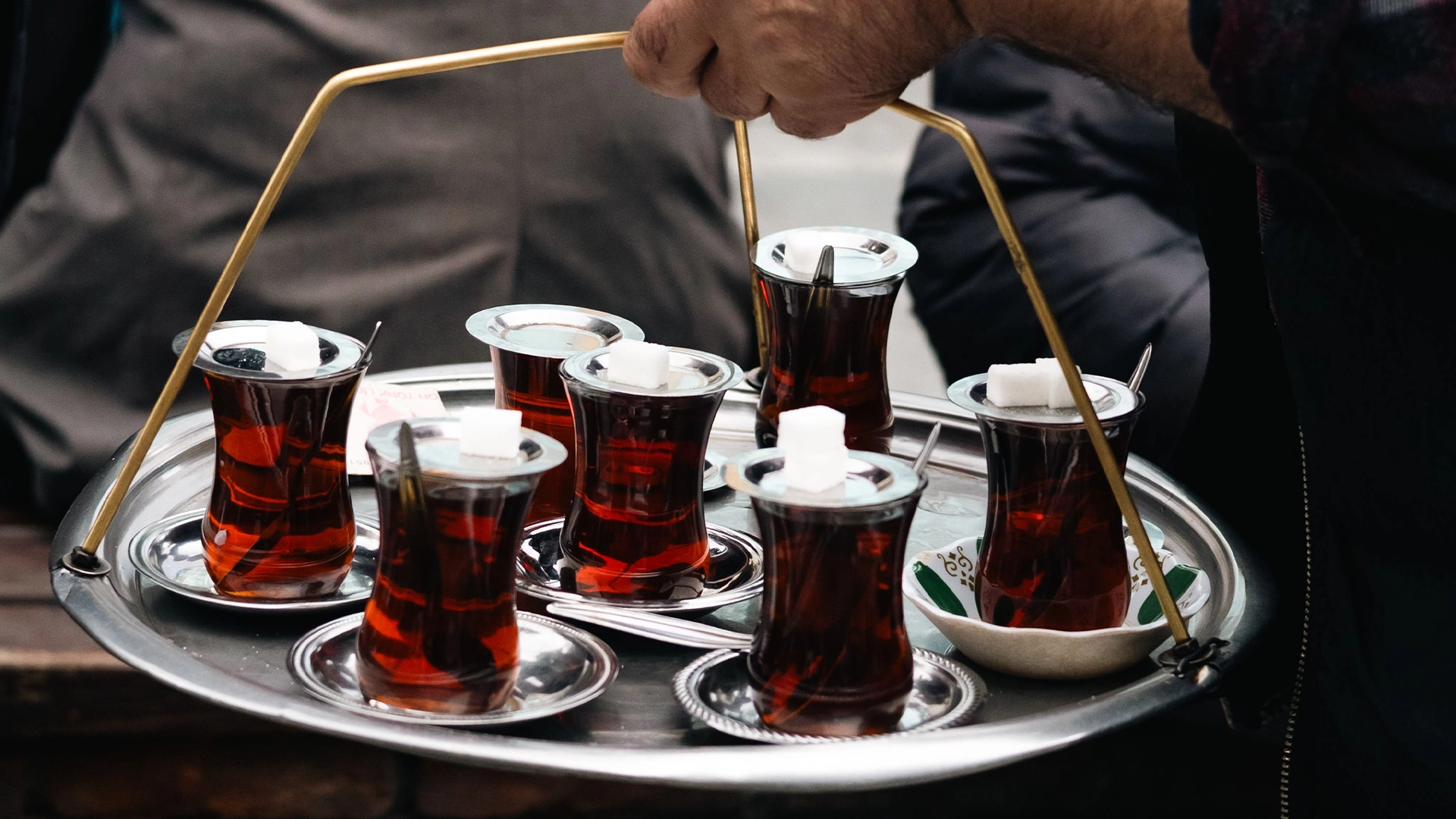
In bustling bazaars, artisan workshops, and neighborhood squares, you will invariably spot men navigating steep cobblestones holding suspended brass trays (askı) balanced by a single top arch. On these trays sit dozens of glowing glasses balanced on red-and-white patterned porcelain saucers, each accompanied by two white sugar cubes.
A single telephone ring or a raised eyebrow from a carpet weaver across the alleyway is all it takes; within moments, steaming glasses arrive hot, crisp, and fresh.
Whether shared between friends catching up on a seaside promenade or offered spontaneously to a traveler resting near an ancient palace gate, tea is never transactional. It is an invitation to pause, connect, and converse.

Tea as a Geographical Journey: From Istanbul to Halfeti
Tea is the universal denominator across Turkey's diverse landscapes:
Historic Istanbul & Palaces: Sitting outside imperial marble gates, sipping tea while the call to prayer drifts across the Golden Horn, connects modern life to centuries of imperial heritage.
The Sunken World of Halfeti: Along the tranquil banks of the Euphrates, where the sunken minarets of old stone villages emerge from deep blue waters, open-air wooden platforms offer travelers a quiet glass of tea as riverboats glide past ancient rock terraces.
High Plateau Villages: Wrapped in woven wool shawls, villagers gather on wooden balconies overlooking misty valleys, passing hot glasses from hand to hand to warm cold fingers against mountain breezes.
Regardless of province, architecture, or dialect, ordering tea remains the ultimate gesture of belonging. As the famous Turkish proverb reminds us:
“Gönül ne kahve ister ne kahvehane, gönül sohbet ister kahve bahane.”
(The soul craves neither coffee nor coffeehouse; the soul craves companionship, the drink is merely an excuse.)
Etiquette: How to Savor Tea Like a Local
When enjoying tea during your travels in Turkey, a few unspoken customs will enrich your experience:
Hold by the Rim: Grip the very top flared lip of the glass with your thumb and forefinger, resting the base lightly on your little finger or the saucer.
The Sugar Dilemma: While purists drink it plain to savor the tannic nuances of the Rize leaf, dropping a sugar cube in and gently stirring with the diminutive spoon is an integral part of the acoustic landscape.
Placing the Spoon Across: When your host offers another glass and you have reached your limit, simply lay your tiny spoon horizontally across the rim of the glass. This silent etiquette signals: "Thank you, I am fulfilled."
Experience Turkey’s Living Traditions with Local Explore Tours
Experiencing Turkey isn’t confined to touring monumental archaeological sites or visiting museums; it lives in unhurried moments shared across small tables in secluded courtyards.
At Local Explore Tours, we curate bespoke, private cultural journeys designed to bring you face-to-face with authentic traditions. From private archaeological walks through UNESCO World Heritage ruins to exclusive artisan visits and tranquil tea ceremonies overlooking pristine valleys, our expert guides ensure you experience Turkey with intimacy, depth, and luxury.
Ready to slow down and discover Turkey through genuine local eyes?
Contact our private travel specialists today to design your personalized, private itinerary across Anatolia.