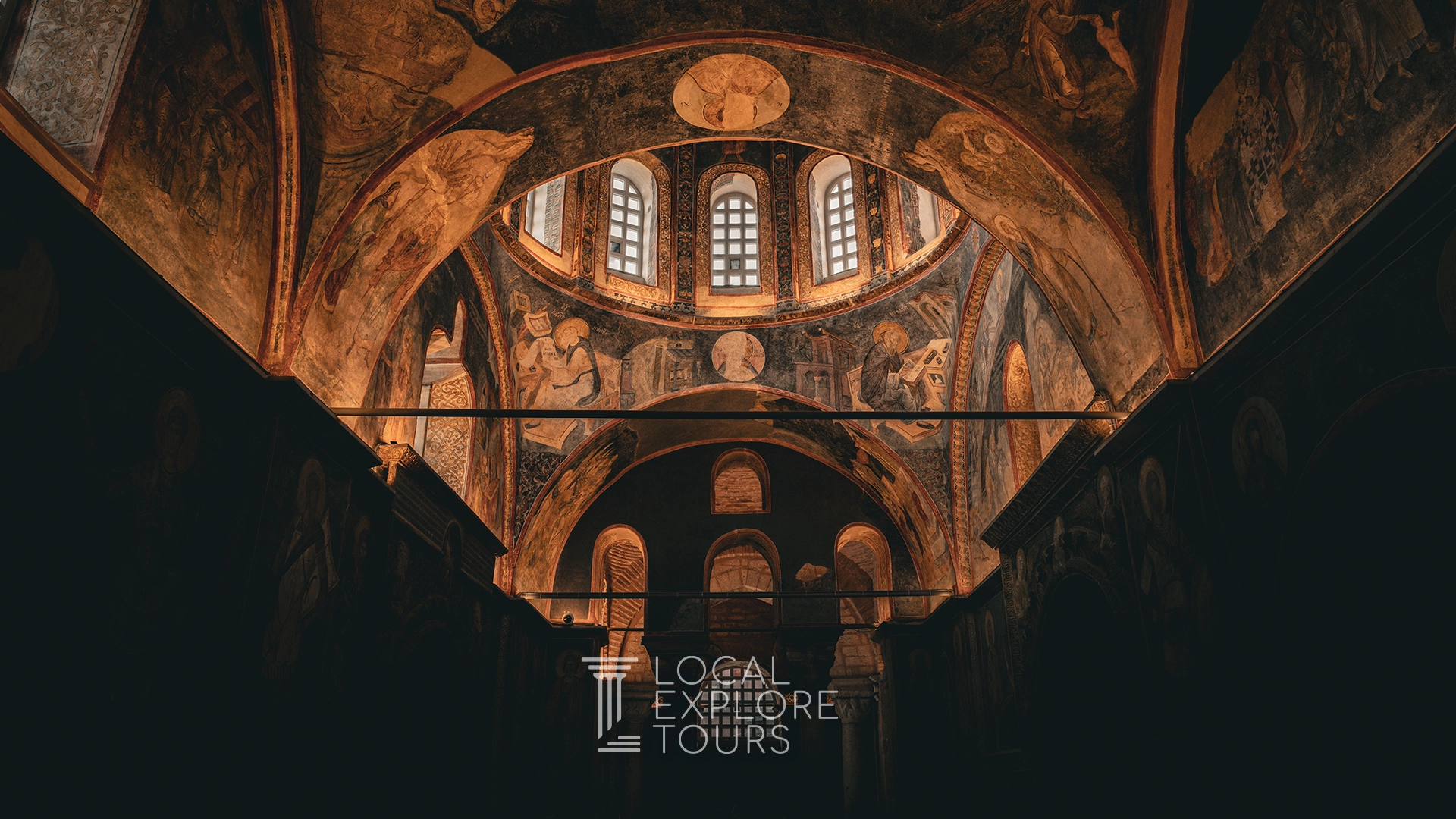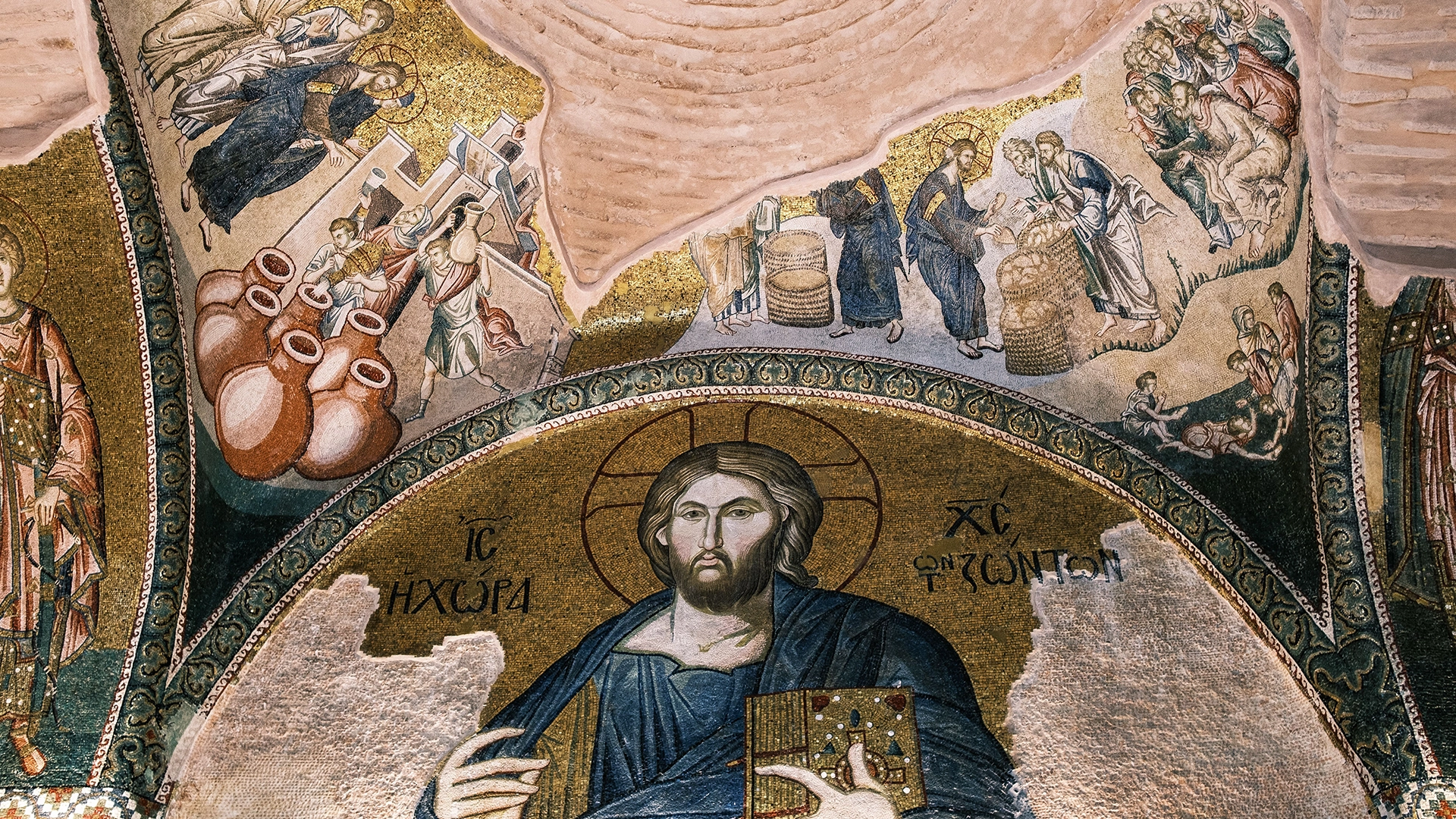
Exploring the Chora Church fresco in Istanbul
Chora Church Frescoes in Istanbul
What Was the Palaeologan Renaissance?
To appreciate why the Chora Church is an absolute must-see, one must step back into the early 14th century. The Byzantine Empire, once a sweeping Mediterranean superpower, had been severely weakened by decades of political instability and the devastating Sack of Constantinople during the Fourth Crusade in 1204. By the time the Palaeologos dynasty reclaimed the capital in 1261, the empire was geographically diminished and financially strained.
Yet, in the midst of political decline, an extraordinary cultural flowering occurred. Scholars, poets, philosophers, and artists turned inward, sparking a intellectual and aesthetic movement known today as the Palaeologan Renaissance.
Unlike the rigid, highly stylized, and iconographic Byzantine art of earlier centuries—which emphasized solemnity, flat perspectives, and divine distance—Palaeologan art introduced something revolutionary:
Human Emotion and Expression: Figures began to show genuine grief, tenderness, awe, and joy.
Dynamic Movement: Drapery flowed organically, and poses became fluid rather than stiff.
Narrative Depth: Mosaics and frescoes began telling complex stories with background architecture and landscape depth, anticipating early Italian masters like Giotto.
Luminous Realism: The use of light, shadow, and gold leaf created a three-dimensional atmosphere that bridged the earthly realm with the divine.
Constantinople was not merely preserving ancient traditions; it was actively reinventing visual storytelling.
The Legacy of Theodore Metochites: The Mind Behind Chora
The Chora Church, originally named the Church of the Holy Saviour in Chora (meaning "in the countryside," as it originally stood outside the Constantine Walls), owes its magnificent interior to one visionary man: Theodore Metochites.
Metochites was a polymath, philosopher, poet, and the Prime Minister (Grand Logothete) to Emperor Andronikos II Palaeologos. Wealthy and deeply intellectual, Metochites undertook the grand restoration and decoration of the monastery between 1315 and 1321. He viewed art as an expression of spiritual devotion and a monument to human intellect.
When you walk into the outer narthex today, you can actually see Theodore Metochites depicted in a magnificent fresco above the main entrance. He is shown kneeling gracefully, wearing an ornate, oversized turban-like headpiece of the Byzantine court, presenting a miniature model of the restored Chora Church directly to Jesus Christ. It is a striking personal signature left by the patron who made this artistic marvel possible.
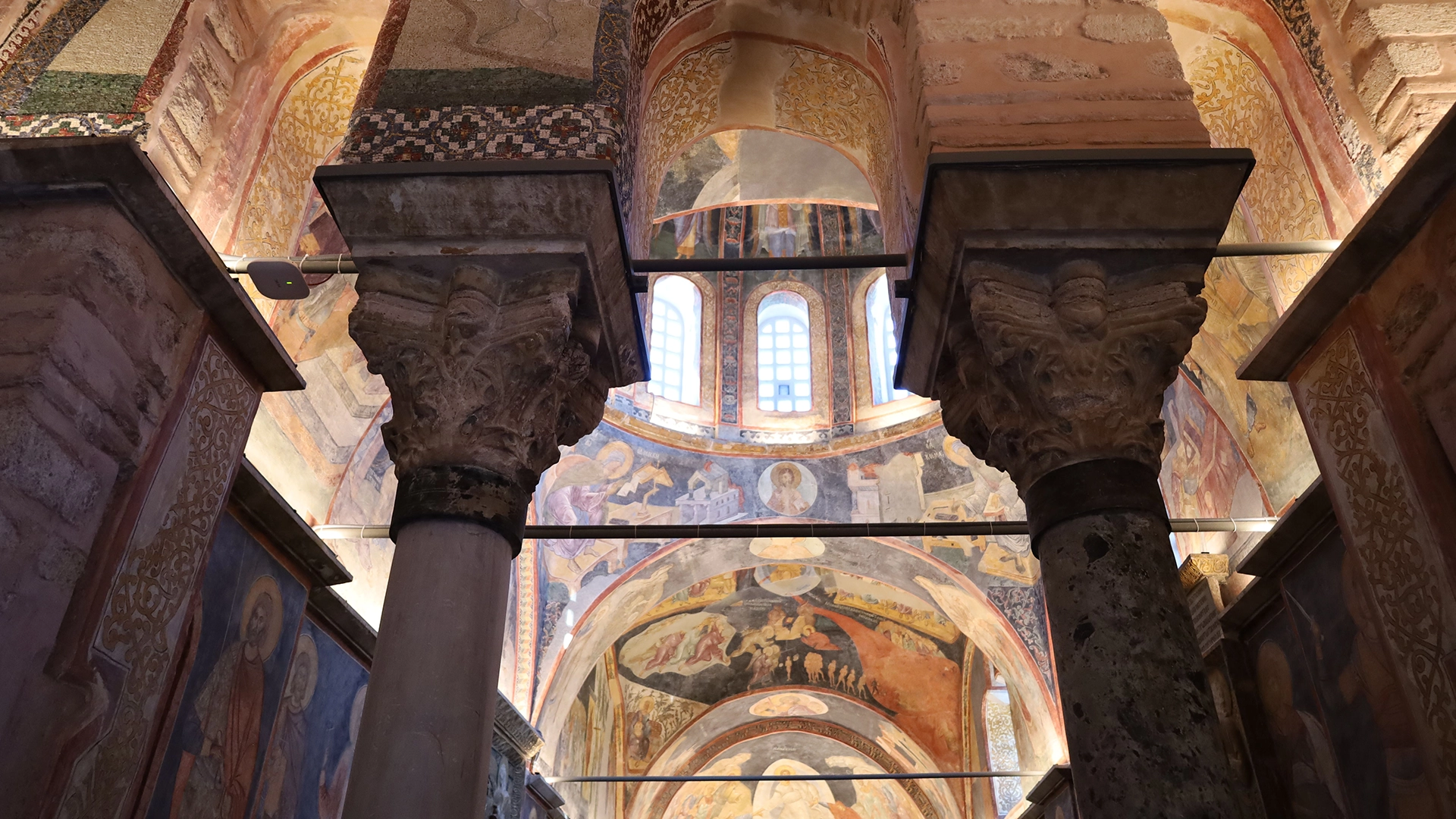
What Makes Chora’s frescoes and Frescoes Unmatched?
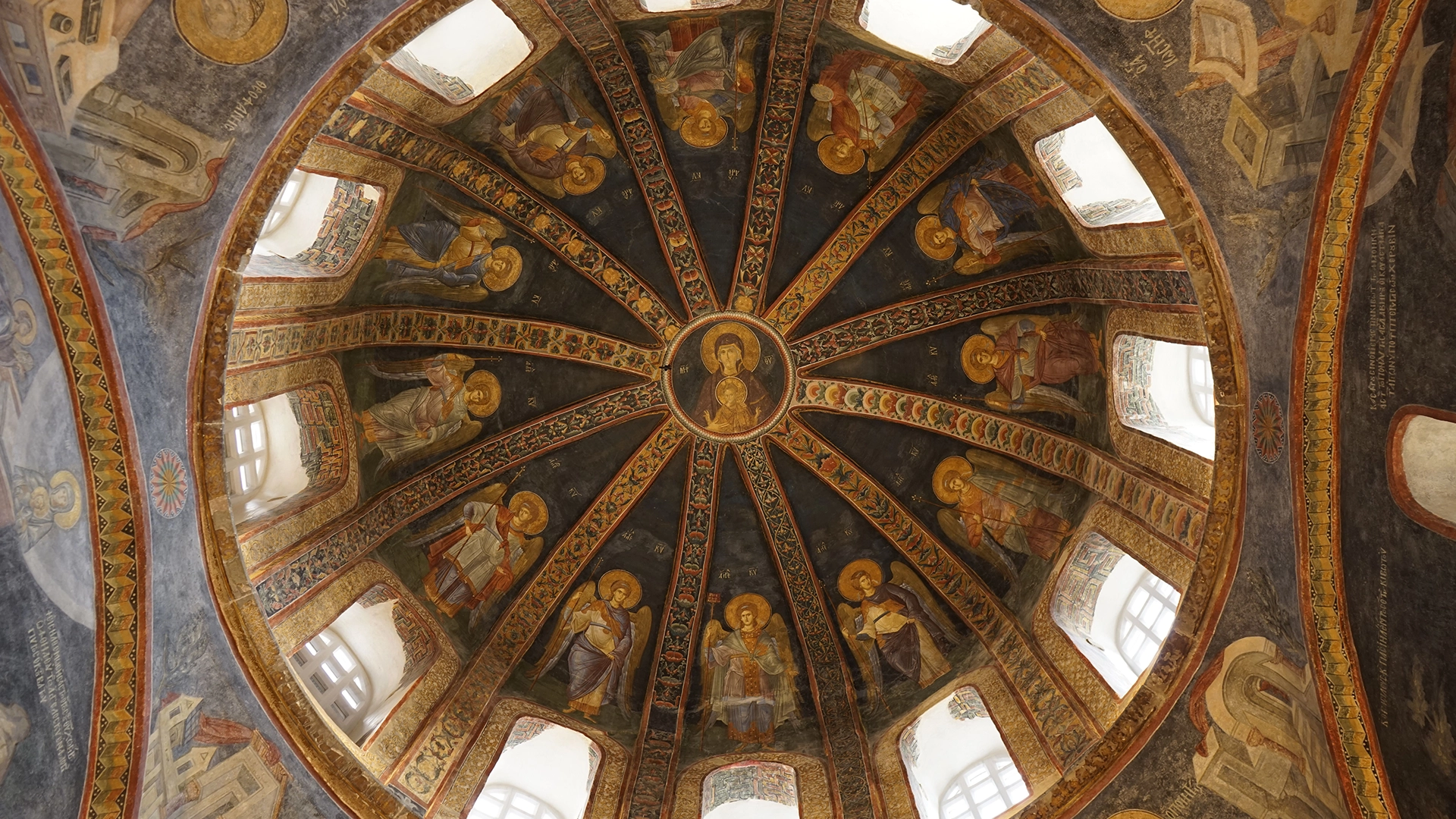
Entering the Chora Church is an immersive visual experience. Virtually every square inch of the upper walls, vaulted ceilings, and domes is adorned with radiant gold fresco and vivid frescoes. For first-time visitors, two specific areas require special attention:
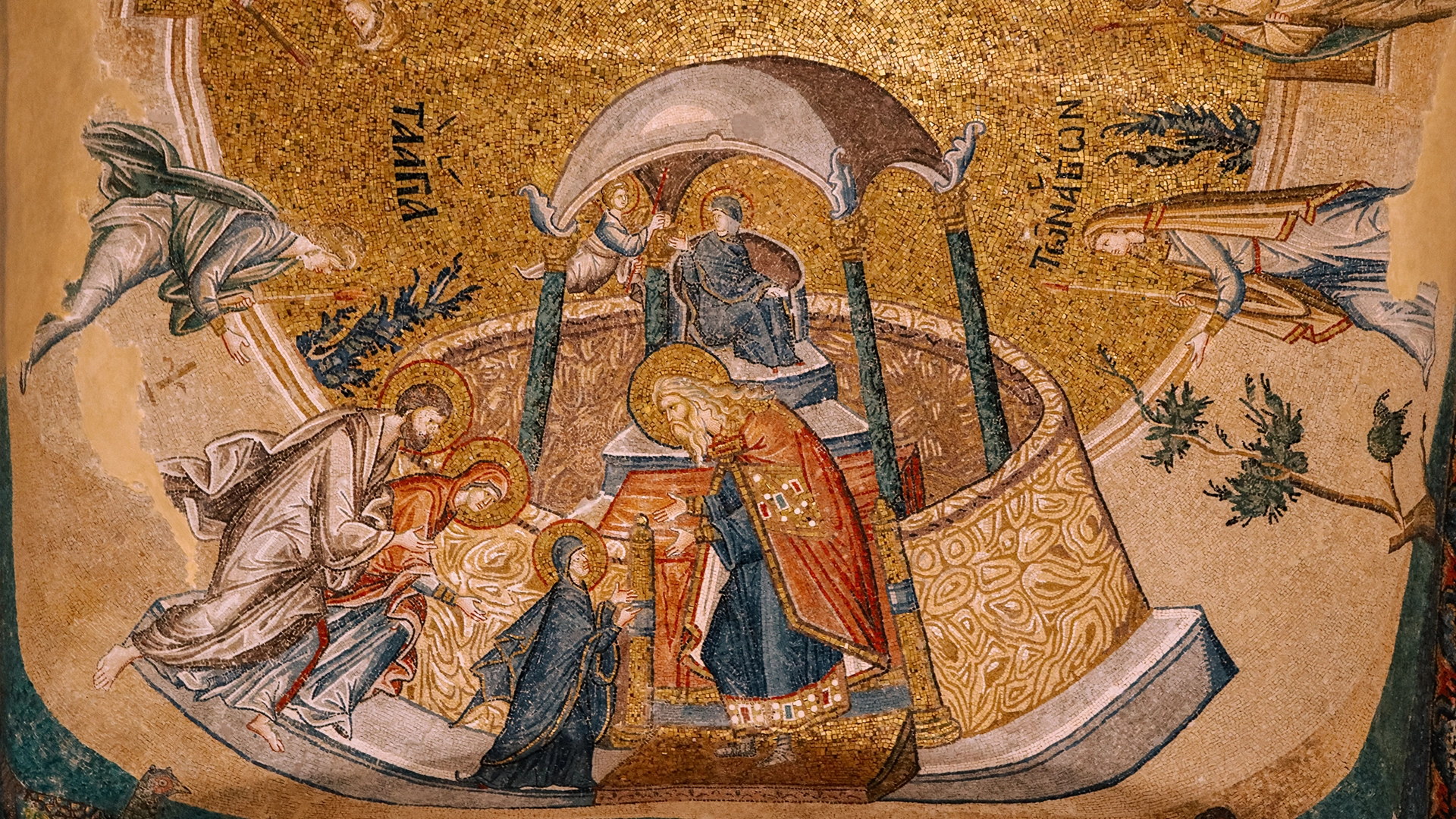
1. The Life of the Virgin Mary and Christ (Outer & Inner Narthex)
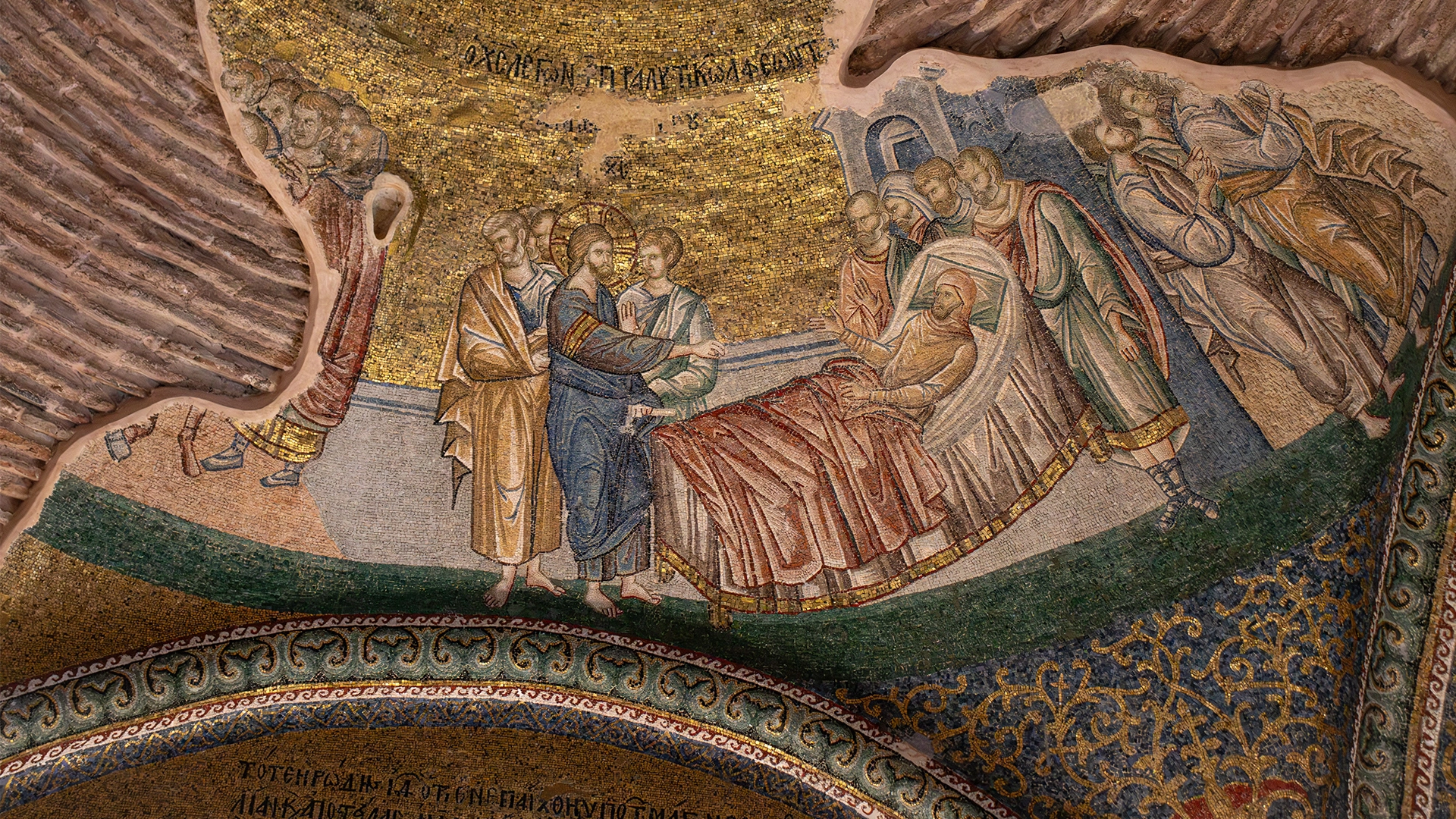
The fresco cycles in the entrance vestibules depict the life of the Virgin Mary and the genealogy of Jesus Christ in exquisite detail. Rather than isolated portraits, these frescos function like a medieval cinematic narrative.
Look closely at the Enrollment for Taxation at Bethlehem. The figures are rendered with individual facial characteristics, detailed clothing folds, and subtle shadows. The architectural backdrops give a distinct sense of spatial perspective long before perspective rules were formalized in Florence.
2. The Parekklesion: The Burial Chapel of Masterpieces
While the narthex houses gold leaf frescos, the side chapel (Parekklesion)—designed as a funerary space for Metochites and high-ranking nobles—contains some of the most emotionally charged frescoes in world art history.
The absolute crown jewel of this chapel is the Anastasis (The Resurrection) fresco in the apse:
The Scene: Christ, clad in radiant white garments, stands triumphantly over the broken gates of Hell, holding chained figures of Hades under his feet.
The Action: In a burst of superhuman energy, Christ reaches out with both hands, simultaneously pulling Adam and Eve out of their sarcophagi.
The Emotion: The sense of kinetic movement, the flowing drapery, and the sheer power conveyed in Christ's posture are unparalleled in medieval art. It is a scene of profound hope, liberation, and dramatic intensity.
Opposite the Anastasis is the Dormition of the Virgin and the Last Judgment, featuring a swirling river of fire and detailed heavenly hierarchies that rival any Western Renaissance painting.
The Missing Historical Link
For decades, traditional art history textbooks framed the Italian Renaissance as a sudden, spontaneous rebirth of classical aesthetics in 15th-century Tuscany. However, modern scholarship increasingly recognizes the vital cultural exchange between Constantinople and Italy during the 13th and 14th centuries.
Italian painters such as Giotto di Bondone and Duccio di Buoninsegna were heavily influenced by Byzantine artists who traveled westward, as well as Italian merchants and scholars visiting Constantinople. The emotional realism seen in Giotto’s Scrovegni Chapel in Padua shares striking stylistic parallels with the contemporary frescoes in Chora.
Understanding the Chora Church allows travelers to see the bigger picture: the Italian Renaissance did not happen in isolation. It was part of a broader, Mediterranean-wide intellectual movement in which Constantinople played a foundational role.
Practical Tips for First-Time Visitors to Istanbul
If you are planning your first trip to Istanbul and want to experience the Chora Church like a seasoned traveler, keep these essential tips in mind:
1. Combine Your Visit with the Historic City Walls
Chora is located in the Edirnekapı neighborhood, situated along the ancient Theodosian Walls of Constantinople. After exploring the church, walk along the restored sections of these massive 5th-century fortifications to feel the grandeur of the ancient city boundary.
2. Plan Your Route
While historical sites like Hagia Sophia and Sultanahmet are clustered together in the Old City center, Chora is roughly 15 to 20 minutes away by taxi or public transport (tram/bus). Visiting Chora offers a wonderful excuse to explore the nearby historic quarters of Fener and Balat, famous for their colorful wooden houses, steep cobblestone streets, and vibrant café culture.
3. Take a Guided Art History Tour
Because the iconographic program inside Chora is exceptionally rich and filled with theological and historical symbolism, visiting with a specialized art history guide makes a world of difference. Understanding who the figures are and what the architectural motifs represent elevates a simple sightseeing stop into an unforgettable cultural masterclass.
Rediscover Istanbul’s Artistic Heart
Istanbul is a city of grand monuments: towering minarets, massive domes, and opulent palaces that reflect the power of empires. But the Chora Church offers something different. It is an intimate, poetic, and emotionally resonant space where gold leaf captures the light of a bygone era and art speaks directly to the human soul.
For first-time visitors seeking to go beyond the usual tourist highlights, stepping inside Chora is an invitation to witness the lost spark of the East—the forgotten cradle of the Renaissance.
Discover Istanbul Beyond the Surface with Local Explore Tours
At Local Explore Tours, we curate scholarly, immersive, and deeply personal travel itineraries for discerning visitors. Whether you are exploring Byzantine masterworks or Ottoman architectural marvels, our expert guides bring history to life with the nuance and depth it deserves.